Are your shoes quietly losing their shape and collecting bacteria every time you toss them into a closet or by the door? Poor storage does more than create clutter-it shortens the life of your footwear and can leave odors, moisture, and damage to build up unnoticed.
The right shoe storage solution protects structure, preserves materials, and helps maintain a cleaner home. From everyday sneakers to leather dress shoes, how you store them directly affects how long they look and feel their best.
This guide explores practical ways to organize shoes without crushing, creasing, or trapping humidity. With a few smart storage habits, you can keep every pair fresh, accessible, and ready to wear.
Why Proper Shoe Storage Matters for Shape Retention and Everyday Hygiene
Why does shoe storage matter beyond keeping an entryway tidy? Because most damage happens off the foot, not on it. Leather dries unevenly when one shoe is pressed against another, knit uppers collapse at the toe box, and trapped moisture starts the slow cycle that leads to odor, lining breakdown, and sometimes mildew.
Small habits change the lifespan of a pair. In daily rotation, shoes need space to release internal humidity from sweat and outside moisture, especially if you commute, walk in rain, or wear the same pair for long hours. I’ve seen office shoes stored under a radiator harden at the vamp within a season, while the same model kept on an open shelf with Woodlore cedar shoe trees held its shape much longer.
- Shape retention: Proper support reduces creasing across the forefoot and prevents heel counters from folding inward after hurried removal.
- Hygiene control: Air circulation limits bacterial odor buildup far better than sealing slightly damp shoes in bins or bags.
- Material stability: Suede, leather, and adhesives all react badly to heat spikes, darkness with trapped humidity, or compression under heavier pairs.
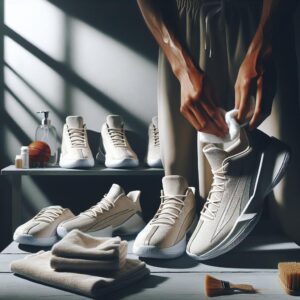
A quick real-world observation: gym shoes are often the worst-stored item in a home. People toss them into lockers, car trunks, or the bottom of a closet, then wonder why they smell “clean but off” even after washing. That stale odor usually comes from incomplete drying in the midsole and footbed, not surface dirt.
Simple, but important. Good storage is really part of shoe care workflow: rotate pairs, let them dry fully, use the right support, and avoid stacked pressure. If shoes are stored badly, cleaning alone will not solve the problem.
How to Store Shoes Correctly: Space-Saving Methods, Moisture Control, and Cleaning Habits
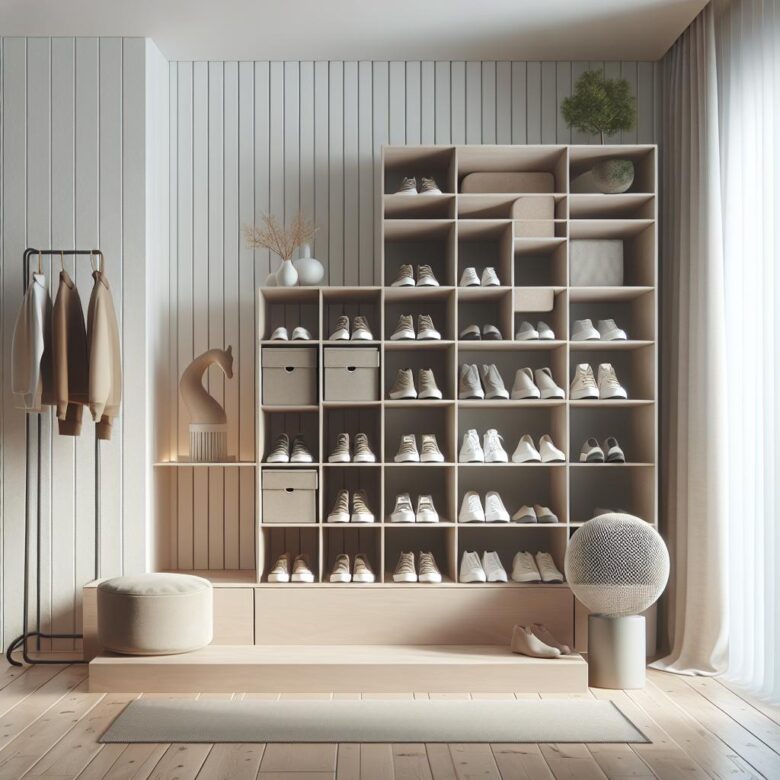
Start with zoning, not stacking. Divide shoes by use frequency, then assign storage depth accordingly: daily pairs at arm’s reach, occasional pairs higher up, off-season pairs in closed bins. In small apartments, a slim over-door rack and an under-bed tray usually outperform a crowded floor shelf because pairs stay separated instead of collapsing into each other.
Moisture is what quietly ruins storage systems. Before putting shoes away, give worn pairs a few hours to air out, then add cedar inserts or silica gel packs; I’ve seen leather loafers mildew inside a spotless closet simply because they were stored right after a rainy commute. A compact hygrometer from ThermoPro is useful in closets that feel “fine” but run damp in summer.
One thing people miss.
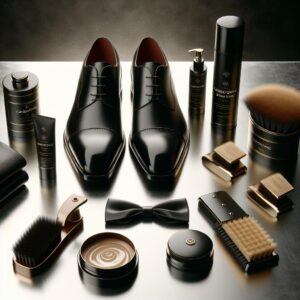
- Use shoe trees for leather dress shoes and boots; use rolled acid-free tissue for sneakers and flats that do not need tension.
- Store clear bins with ventilation holes, not fully sealed tubs, if the shoes are even slightly warm or humid.
- Keep soles facing down on flat support; hanging shoes by the heel for long periods can distort lighter pairs.
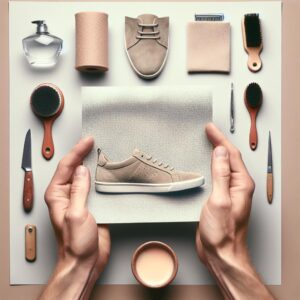
Quick real-life observation: mud does less long-term damage than invisible grit. Tiny particles left in seams and tread act like sandpaper, especially when shoes are pulled in and out of storage. A soft brush, microfiber cloth, and a small bottle of diluted saddle soap or sneaker cleaner from Jason Markk handle most weekly cleaning without over-wetting the material.
If you rotate shoes, set a simple reset habit: wipe, air, reshape, store. That four-step sequence takes two minutes and prevents the usual problems-odor buildup, warped uppers, and that annoying moment when a pair looks older just from being put away badly.
Common Shoe Storage Mistakes That Cause Odor, Deformation, and Faster Wear
Stuffing shoes into the bottom of a closet is one of the fastest ways to ruin both shape and hygiene. Uppers crease under uneven pressure, heel counters collapse, and any moisture left from a normal day’s wear gets trapped where air cannot move. That stale smell people blame on “old shoes” often starts with storage, not age.
Three mistakes show up constantly in real homes and retail back rooms:
- Putting shoes away before they have fully dried after commuting, workouts, or rain exposure.
- Stacking pairs sole-to-upper in bins, which transfers grit and compresses softer materials like suede and knit.
- Using wire shelves for delicate flats or lightweight sneakers, where the edges leave pressure lines along the midsole.
Shortcuts cause damage. I have seen leather loafers stored in plastic tubs develop a sour odor in one season because the owner “organized” them right after wear; there was no airflow, and the residual humidity had nowhere to go. A simple check helps: if the insole still feels cool, it is usually too soon to store.
Another overlooked issue is the wrong insert. People use stiff shoe trees in soft unstructured shoes, or no support at all in boots that need shaft shaping; both choices distort the form over time. For everyday monitoring, even a small digital hygrometer from ThermoPro inside a wardrobe can reveal why odor keeps returning despite cleaning.
And yes, sunlight is not a cure. Leaving shoes on a windowsill may dry them faster, but it also hardens leather, fades dye, and can weaken glue lines. Better storage is less about hiding shoes neatly and more about controlling pressure, moisture, and air.
The Bottom Line on Essential Shoe Storage Solutions to Maintain Shape and Hygiene
Choosing the right shoe storage solution comes down to matching your space, shoe types, and daily habits with a system that protects structure and limits moisture buildup. The best setup is one you can maintain consistently-with enough airflow, easy access, and support for pairs that crease or deform easily. Prioritize clean, dry storage over decorative convenience, and invest in organizers that make rotation and upkeep effortless.
Before deciding, focus on these practical criteria:
- Breathability: reduce odor and humidity retention
- Support: preserve shape for leather, boots, and formal shoes
- Accessibility: encourage regular use and proper organization
- Scalability: choose a system that can adapt as your collection changes
When storage supports both hygiene and structure, your shoes stay in better condition longer-and replacement costs drop over time.

Dr. Marcus Vane is a Doctor of Podiatric Medicine (DPM) and a specialist in athletic biomechanics. With over a decade of experience treating professional runners and athletes, he focuses on how footwear impacts kinetic chain performance. At OxydShoes Pro Guide, Dr. Vane provides evidence-based reviews to help you find the perfect balance between high-speed performance and long-term foot health.