Why do your basketball shoes start looking worn out long before the traction fades? For most players, the first visible damage is not a blown outsole or torn upper-it is deep creasing across the toe box that changes both the look and feel of the shoe.
In performance basketball footwear, creases are more than a cosmetic annoyance. Repeated folding can stress upper materials, affect fit, and make a premium pair feel broken down far earlier than it should.
The good news is that most creasing is not random or unavoidable. With the right mix of fit, movement habits, storage, and material care, you can slow it down dramatically and even improve the appearance of shoes that already show wear.
This guide breaks down what actually causes creases in basketball shoes, how to prevent them without compromising performance, and the safest ways to reduce existing crease lines at home.
Why Performance Basketball Shoes Crease: Materials, Flex Points, and On-Court Wear Patterns
Why do some basketball shoes crease after two runs while others stay cleaner for months? It usually comes down to upper construction, not just how careful the player is. Thin synthetic skins, knit-based uppers with fuse overlays, and softer leather all fold differently once the forefoot starts bending under load.
The main crease zone sits just behind the toe box, where the foot drives downward during takeoff and then rolls forward on landing. In performance models with aggressive forefoot flex grooves, that bend becomes more concentrated, so the upper collapses in the same line over and over. That is why a low-top guard shoe with a pliable forefoot often shows sharper creasing than a stiffer, more padded big-man model.
Three material behaviors matter most:
- Leather tends to form defined lines but can sometimes relax slightly with reshaping.
- Synthetic leather often holds the crease memory longer because the surface layer is less forgiving.
- Engineered mesh or knit may not show a hard line, but it can develop sagging or rippling around fused panels.
Quick real-world observation: I see this a lot with players who lace tight through the midfoot but leave extra space at the toe. That gap lets the upper cave in sooner, especially during hard jab steps. Small detail, big effect.
If you want to inspect where creasing will happen, press the forefoot by hand and watch where the upper folds naturally under light force. Tools like a shoe tree or even a fit check in front of a mirror can reveal whether the bend matches your foot’s flex point or if the shoe is collapsing in the wrong place. When the crease line forms off-axis, wear tends to speed up, not just become more visible.
How to Prevent Creases in Basketball Shoes: Fit, Lacing, Storage, and Daily Care Tactics
Start with fit. A basketball shoe that is slightly long in the toe box will crease faster because your forefoot has room to slide before push-off, especially on hard jab steps and full-speed deceleration. When I check fit in-store, I look for thumbnail-width space at the front, then walk downhill on an incline board if the shop has one; if your toes drift forward, the upper will fold in the same spot every session.
Use lacing to lock the foot back, not just tighten the shoe. A runner’s loop at the top eyelets helps reduce forward migration, while keeping the middle rows snug prevents the upper from collapsing unevenly over the metatarsals. Simple fix.
- Wear the same sock thickness you play in when fitting; a thin try-on sock can hide movement that becomes creasing later.
- Re-tie after warm-up once the upper softens and your foot settles-yes, this matters more than people think.
- If one shoe creases earlier, check for asymmetry in your stance or ankle mobility before blaming the material.
Storage is where many pairs get quietly damaged. Don’t leave shoes in a hot car or jammed under gym gear; heat softens adhesives and makes the toe box set into whatever shape it dries in. I’ve seen players pull a pair from a duffel after a weekend tournament and one shoe already had a permanent fold from being crushed under a shaker bottle and knee sleeve.
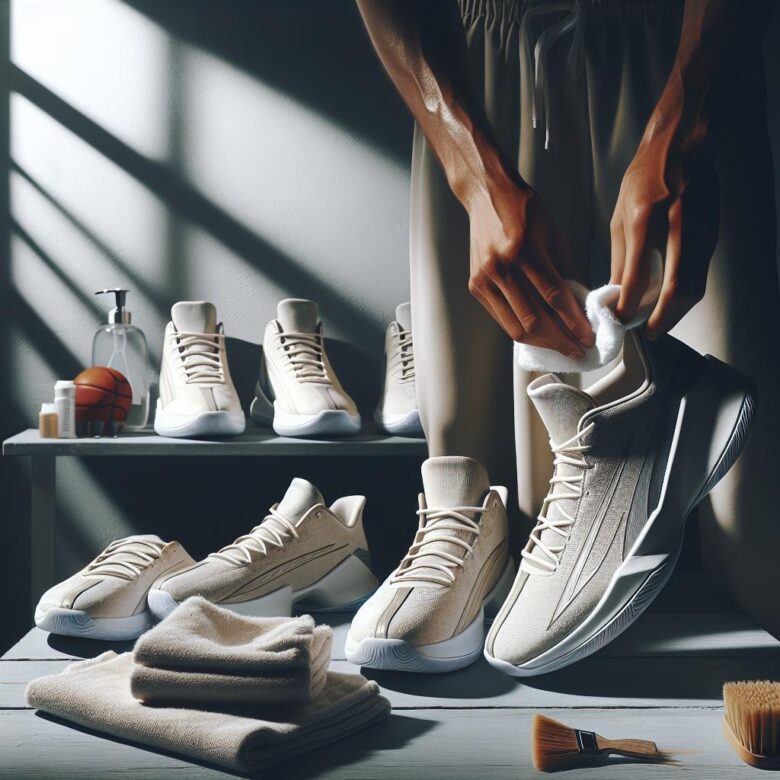
After each run, air them out with a shoe tree or loosely packed paper, then brush off dust so grit does not work into flex lines like sandpaper. Crep Protect Shoe Trees or Jason Markk cleaning tools are practical here, but the habit matters more than the brand. If you rotate two pairs, both usually crease less-not because of magic, just because the foam and upper get time to recover between sessions.
How to Remove or Minimize Creases in Basketball Shoes Without Damaging Performance Materials
Already have toe-box creases? Stop before reaching for a household iron. Performance uppers-engineered mesh, Fuse, Knitposite, TPU films, synthetic leather blends-react very differently to heat, and the wrong method can delaminate overlays or deaden flex zones.
The safer workflow is controlled reshaping. Remove the laces, insert a firm shoe tree or tightly packed microfiber towels, then warm the creased area with indirect heat from a conair handheld steamer or a hair dryer on low from several inches away. Massage the material with your thumb rather than pressing hard; you are coaxing fibers back into place, not flattening them like dress shoes.
- For knit or mesh-based uppers, use minimal heat and more internal support; too much moisture can relax the weave unevenly.
- For synthetic leather, a slightly damp cloth between the heat source and the upper helps prevent surface glazing.
- For shoes with fused toe caps, stop if the overlay edge starts looking glossy-adhesive movement is beginning.
Quick observation: some creases are “set” by the strobel board and forefoot flex pattern, not the upper alone. In those cases, you can reduce the visual line, but you will not erase it without changing how the shoe bends on court.
I’ve seen this most with guards who drive off the first metatarsal area every possession. One player brought in a pair of Kobe protros after trying the towel-and-iron trick; the crease looked flatter, but the toe film had stiffened, and the forefoot feel changed immediately. Not worth it.
Let the shoe cool fully while stuffed, ideally overnight. If the crease returns after one wear, switch from “removal” to “management”-light reshaping after games works better than aggressive one-time fixes, and it keeps the upper playable.
Expert Verdict on How to Prevent and Remove Creases in Performance Basketball Shoes
Keeping performance basketball shoes crease-free comes down to a simple principle: reduce avoidable stress and respond early. Smart sizing, careful lacing, proper storage, and quick post-game maintenance will do far more than any last-minute fix. If creases have already formed, focus on gentle reshaping methods that preserve the upper rather than forcing the material back unnaturally.
- For frequent players: prioritize fit, rotation, and regular upkeep.
- For collectors or occasional wear: storage habits and shoe trees matter most.
- When choosing products: favor solutions that protect flexibility, comfort, and court performance.
In the end, the best decision is balancing appearance with function-because a well-maintained shoe should still move naturally, support your foot, and perform when it matters most.

Dr. Marcus Vane is a Doctor of Podiatric Medicine (DPM) and a specialist in athletic biomechanics. With over a decade of experience treating professional runners and athletes, he focuses on how footwear impacts kinetic chain performance. At OxydShoes Pro Guide, Dr. Vane provides evidence-based reviews to help you find the perfect balance between high-speed performance and long-term foot health.